Skin cancer is a significant global health challenge, affecting millions of people with various types. Among the most common and notorious are squamous cell carcinoma and basal cell carcinoma. There is, however, a silver lining of hope: Mohs Surgery is widely regarded as the gold standard in the treatment of certain skin malignancies. Mohs micrographic surgery is a highly detailed-oriented developed process that ensures consummate efficiency in targeting cancerous cells. Therefore, the cancerous tissue is absolutely obliterated under the microscope, with the unnecessary damage to the surrounding, healthy tissue zealously guarded against in a bid to get good cosmetic as well as functional results.
The controlled cure rate of Mohs surgery is higher than that of many other methods. Mohs is a very meticulous step-by-step process, whereby each layer of tissue is very carefully removed, and then the cancer is very precisely examined; then it’s repeated on and on until, eventually, the cancer is totally cleared. The Mohs surgeon examines the tissue to ensure complete cancer removal. Today, with Mohs micrographic surgery, the principle behind the complete removal of skin cancer goes hand in glove with the preservation of maximum normal tissue, thereby limiting the number of large repairs or grafts needed. It is in the background of this that the reasons for Mohs to stand towering at the forefront as the preferred option for skin cancer treatment converge; this blending will be discussed in the ensuing sections of where innovation meets hope.
Accuracy Of Skin Cancer Removal
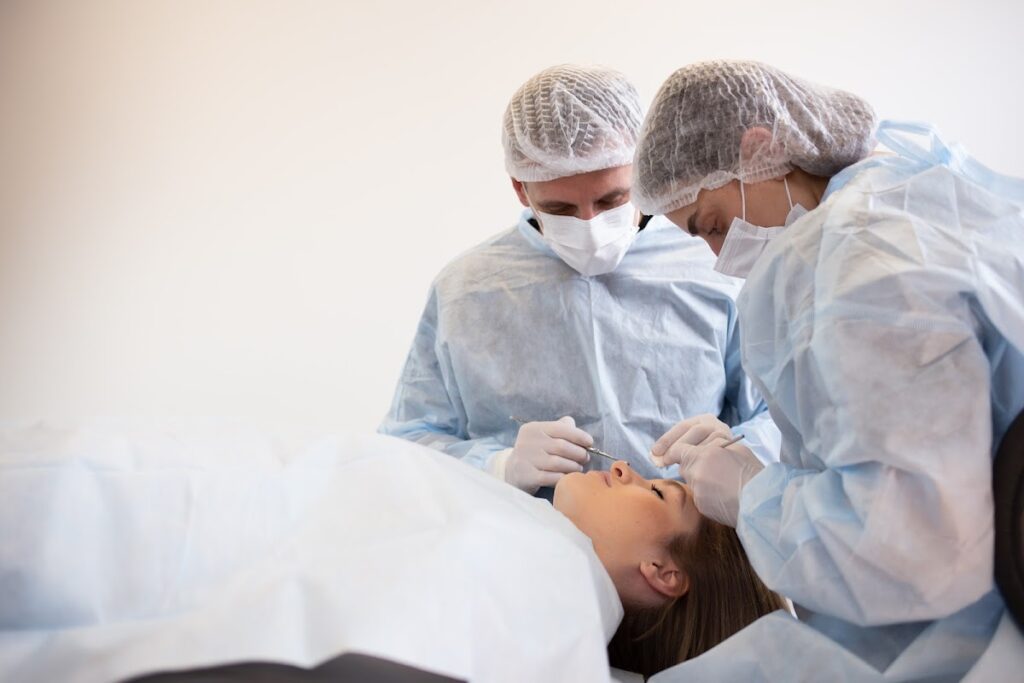
The core foundation of Mohs micrographic surgery is the accuracy of cancer removal. Mohs surgery is such a turning point in the field of dermatology that a lot of hope is attached to this procedure by those patients who are suffering from squamous or basal cell carcinoma skin cancers. In the following sections, it will be explained how Mohs surgery has altered the treatment paradigm:
- Mohs Technique: A scalpel is used, and the surgeon carefully anesthetizes the area before excising the layers of tissue that have the cancer. This will, of course, enable the surgeon to affect only the tissue involved in the process, thus saving as much healthy tissue as possible.
- Healthy Tissue Preservation: It is very important to save healthy tissue. The microscope used in the lab is directed toward every minute layer of removed tissue. It ensures that all of the cancerous cells are removed and minimizes the surrounding healthy tissue damaged during the process.
- Examine Removed Tissue: What sets Mohs surgery apart from all other treatments is the live extraction and examination of every layer of tissue removed during the procedure. This is done until no more cancer cells are found in a step-wise, vertically oriented manner, maximizing the cure endpoint.
Mohs micrographic surgery is still more than a procedure: it is a meticulous symphony of surgery that brings together precision, patient care, and state-of-the-art technique. The unparalleled accuracy of the Mohs technique is sought by those who want the best opportunity possible for a complete cure of their cancer while saving as much healthy tissue as possible.
High Cure Rates
Mohs surgery has been proven to yield high cure rates because of its accuracy in treating skin cancer. The technique was developed by Frederick Mohs and has been perfected by Mohs surgeons for nearly a century. Certain skin cancers, such as basal cell carcinoma and squamous cell carcinoma, respond very well to Mohs surgery.
Statistics have proven that Mohs surgery has the highest cure rate among methods for curing BCC and SCC. It can run up to 99% for BCC and 97% for SCC. These numbers suggest how effective this surgery is in eliminating cancerous cells while doing the least amount of damage to healthy skin.
- Compared to Other Treatments: Other forms of skin cancer surgeries do not study the removed tissue with this level of accuracy, which leads to additional cancer cells remaining in the patient, thus calling for more treatments. In the process of performing Mohs surgery, sections of the skin are studied the same exact day it is removed, usually within hours, to ensure that the cancer is swept out, often in just one day of treatment.
The benefits of Mohs surgery go well beyond its outstanding cure rates. The major benefit of this Mohs technique is that it offers the best possibility for removing total cancer while at the same time sparing the healthiest skin—a procedure not only less invasive but also much less scarring and most cosmetically pleasing. In instances where an operation must cover a large area, the Mohs surgeon assumes the responsibility for the reconstruction procedures and provision of reconstructive support to assist healing and occasionally performs skin flaps or grafts to achieve the greatest cosmetic and functional results.
In other words, the tissue-saving benefit reached through Mohs micrographic surgery is equaled by the high cure rates it attains, making the cure rates one of the best for high-risk skin cancer cases. This technique gives patients peace of mind, as well as better cosmetic results.
Scarring Is Minimized After Mohs Surgery
One advantage of using Mohs surgery to treat skin cancer, whether squamous cell or basal cell, is that very little scarring is left behind. This surgical technique is a real masterpiece in dermatology, being very effective in eradicating cancer and paying much heed to the cosmetic outcome.
- Healthy Tissue Sparing: The Mohs surgeon can remove one thin layer of cancer at a time with a microscope in a lab setting. This maximizes the sparing of healthy tissue and reduces scars.
- Importance to Cosmetic Outcomes: As the painstaking technique of Mohs surgery progresses, also known as Mohs micrographic surgery, it becomes the technique of choice—a technique that is very vital in areas where cosmetic appearance matters, like the face. Unlike most of these other methods for treating skin cancer, which tend to be aggressive, removing large parts of tissue, with the thin layer examination and removal employed in Mohs surgery, only that tissue which is cancerous is excised, and much healthy skin is left.
All this is done after consideration so as to achieve the best cosmetic results: the surgeon anesthetizes the area by injection, delicately removes tissue, and probably uses grafts wherever necessary. Such attention and attempts to salvage so much healthy skin are reasons why Mohs surgery has such high healthy recovery and low scarring rates, making it the front-runner in treatments against skin cancer.
Mohs surgery is not only clinically eminent but also financially astute. It epitomizes quality and economy in principle by maximizing the value for patients who suffer from skin cancer, whether basal cell carcinoma or some less common forms.
- One and Done Philosophy: One of the many wonderful things about Mohs surgery is that it “typically requires only one visit.” The surgeon removes thin layers of tissue and processes them while the patient waits in the next room. There is no need to return multiple times for back-and-forth laboratory processing.
- Repeat Treatments: Mohs procedure, or more precisely, Mohs micrographic surgery, has two of the highest cure rates. This minimizes the likelihood of recurring and hence reduces repeat treatment and, thereby, associated costs.
Appropriate words to use when describing the cost-effectiveness of Mohs surgery for skin cancer:
- Same-day surgery: Most types of Mohs surgery are usually undertaken to treat skin cancer; most simply require a visit to the clinic on any weekday, meaning one goes back home on the same day, saving time and expenses compared to making multiple visits.
- Effective and Efficient: A Mohs surgeon is very effective in making sure all the cancer cells are removed in one sitting, therefore highly reducing the chances of making it necessary for a reoccurrence or a more expensive surgery in due time.
- Reconstruction Coordination: In case a graft or flap is needed, Mohs surgeons can coordinate for reconstruction the same day, easily one office visit.
With its outstanding rate of high cure rates and the requirement for fewer repeat treatments, in the long term, Mohs surgery is a financial measure for those afflicted with a diagnosis of skin cancer. The American Academy of Dermatology supports this procedure, and so does the American College of Mohs Surgery as an essential part of value-centric dermatological care.
Benefits Of Outpatient Surgery
- Walk in, Walk Out: Mohs surgery is a process that is done on the day the patient arrives. You are in the doctor’s office or clinic in the morning, the procedure is done, and you are back home the same day. This affects less day-to-day life, so this is really appealing.
- Less Stress, More Comfort: Since Mohs surgery is an outpatient procedure, the setting is the comfort of a person’s home, which can greatly aid recovery.
Safety Benefits Of Local Anesthesia
- Localized Numbing: To numb the area, Mohs surgery utilizes local anesthesia, meaning that the patient is awake but feels nothing in the affected area. Local anesthesia is often safer than general anesthesia for this procedure.
- Immediate Reaction: Mohs is minimally invasive and can be performed with local anesthesia, thereby reducing the risk to the patient. The operating team will be able to immediately pick up any form of concern during the procedure.
Some of the keywords that bring out the outpatient and safety features of Mohs surgery:
- Accuracy and Convenience: Mohs micrographic surgery provides a meticulous view under the microscope for the excision of only cancerous tissue, leaving uninjured tissue around it. As an outpatient procedure, it highlights the effectiveness of treatment and the care accorded to patients.
- Scalpel and Science: With a scalpel and a microscope, the surgeon took off thin layers of skin one at a time, studying each layer at a time until the cancer disappeared. This was so meticulous a process to have the maximum cure rate in treating such skin cancers as squamous cell and basal cell carcinoma and still be an outpatient procedure.
Mohs surgery offers extremely high cure rates, minimum scarring, and cost-effectiveness—all in an outpatient setting that prioritizes patient comfort and safety.
Appropriate High-Risk Cancers For Mohs Surgery
One should look to Mohs surgery if one is to introduce ingenuity in battling some of the skin cancer world’s most formidable enemies. This is indicated for cancers that have a high risk of recurrence.
Mohs surgery is very targeted. The cancerous cells are separated layer by layer to guarantee the removal of even hidden or deep-seated cancers that are known for their reappearance. It has very high cure rates, particularly for the commonest types of skin cancers: basal cell carcinoma and squamous cell carcinoma. It is quite effective in the armamentarium against recurring cancers.
Conditions Under Which Mohs Surgery Is Used
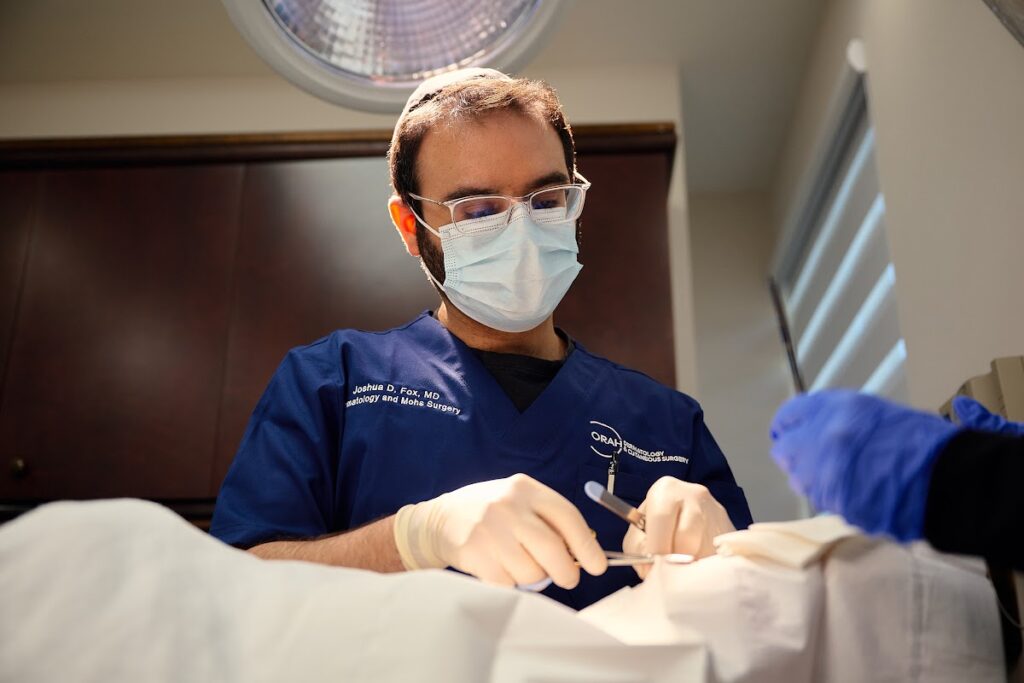
- Cosmetically Sensitive Areas: The areas around the eyes, nose, lips, and ears are very sensitive. Mohs reduces the amount of normal tissue lost, thus preserving the cosmetic areas.
- Undefined Borders: Cancers with ill-defined borders are difficult to treat. Mohs surgery is effective in removing cancers with ill-defined borders by ensuring all cancer cells are removed while sparing maximum healthy tissue.
High cure rates from Mohs surgery, therefore, translate into precise removal of cancerous tissues with the maximum possible conservation of healthy skin, especially in cases of high risk and at cosmetically vital areas.
As with any decision in medicine, consultation with health professionals, and more precisely with members of the American College of Mohs Surgery or the American Academy of Dermatology, is necessary for finalizing treatment decisions. Mohs is not only about the surgical technique but also about the movement sparked by putting the patient in the driver’s seat in battling skin cancer, giving peace of mind, and delivering results.