

Cheek fillers give a little boost of confidence to your face! If your cheeks aren’t as complete as they used to be, these non-surgical treatments are here to the rescue. They restore volume, give your cheekbones a little extra pop, and help you look as refreshed as you feel.
Our cheeks naturally lose some youthful plumpness as we age, but cheek fillers can restore this plumpness without requiring a lengthy recovery. The best part? The results are instant, and everything is tailored to your unique style, giving you a more vibrant, balanced look, all with a touch of finesse.
Why Choose Cheek Fillers?
Cheek fillers are made from substances that mimic what’s naturally found in your skin, like hyaluronic acid. These injectables:
- Add volume where fullness has diminished.
- Highlight cheekbones for a sculpted look.
- Restore youthful fullness.
- Improve facial proportions.
- Provide a non-invasive and less risky option.
- Deliver immediate results.
- It can be tailored to meet individual needs.
Hyaluronic acid fillers like Restylane and Restylane Lyft are particularly popular because they integrate seamlessly with the skin’s structure, ensuring natural-looking results without appearing overdone.
The Benefits of Cheek Fillers Facial Procedure
Cheek fillers are multi-functional aesthetic treatments that help one get a fresher look. From restoring lost volume to enhancing contours and smoothing lines, here are several key advantages of cheek fillers:
1. Restore Volume And Youthful Fullness
Cheek fillers restore youthful volume to the mid-face, lifting sagging skin and enhancing natural contours. They are especially effective for creating a more sculpted, balanced facial appearance. For a truly harmonious look, many patients also consider complementary treatments like chin botox to smooth dimpling and refine the lower face.
Cheek augmentation using dermal fillers is one of the most sought-after non-surgical treatments for improving facial structure.
3. Smooth Lines And Wrinkles
Cheek fillers go beyond volume restoration and smooth lines and wrinkles in the lower face. Fillers create a softer, fresher appearance by addressing folds and creases caused by volume loss.
4. Quick And Minimally Invasive
Unlike surgical procedures, the downtime associated with cheek fillers is minimal. An accomplished practitioner can inject the filler at the site of the defect and accomplish the task with as little discomfort as possible. Most individuals can resume daily activities soon after treatment.
5. Customizable For Your Needs
Your cheek fillers can be tailored to your specific goals at the time of your consultation. Whether you wish to make subtle refinements or theatrical changes, a treatment plan that caters to your unique facial structure and aesthetic goals will be created.
6. Natural-Looking Outcomes
Due to advances in fillers, the results nowadays appear so natural. Hyaluronic acid fillers tend to meld seamlessly with the skin’s inherent structure and, in most cases, offer smooth and symmetrical augmentations that fail to show overdone enhancements.
7. Safe And Effective
Cheek fillers are noted to be very safe, especially those manufactured with hyaluronic acid. There might be some mild side effects, such as redness, swelling, or tenderness at the injection site, but these are temporary. Serious complications are rare when a qualified professional performs the procedure. Smoothing wrinkles and enhancing cheekbones often boosts confidence, making clients look younger and revitalized.
The Cheek Filler Procedure — What To Expect
Understanding the procedure and what happens before, during, and after treatment is essential when considering cheek fillers. Here’s a step-by-step breakdown of the process to ensure you’re fully prepared for your cheek enhancement journey:
1. Consultation And Planning
The journey begins with a consultation with a qualified filler provider. During this session:
- Your facial shape and aging signs are assessed.
- Your goals and desired outcomes are discussed.
- Your provider determines your suitability for cheek fillers by reviewing your medical history, health, and concerns, such as moderate to severe facial wrinkles or folds.
You’ll learn about the dermal fillers available, such as HA (hyaluronic acid) or CAHA (calcium hydroxylapatite) fillers. Based on your needs, a personalized treatment plan will be created to restore volume, smooth wrinkles, and redefine facial contours.
2. The Injection Procedure
Cheek fillers inject gel-like substances into targeted areas to restore volume and enhance contours. The steps typically include:
- Preparation: The cheeks are cleansed, and a numbing agent may be applied to ensure comfort during the procedure.
- Mapping: The provider carefully maps the injection sites to achieve balanced and natural results.
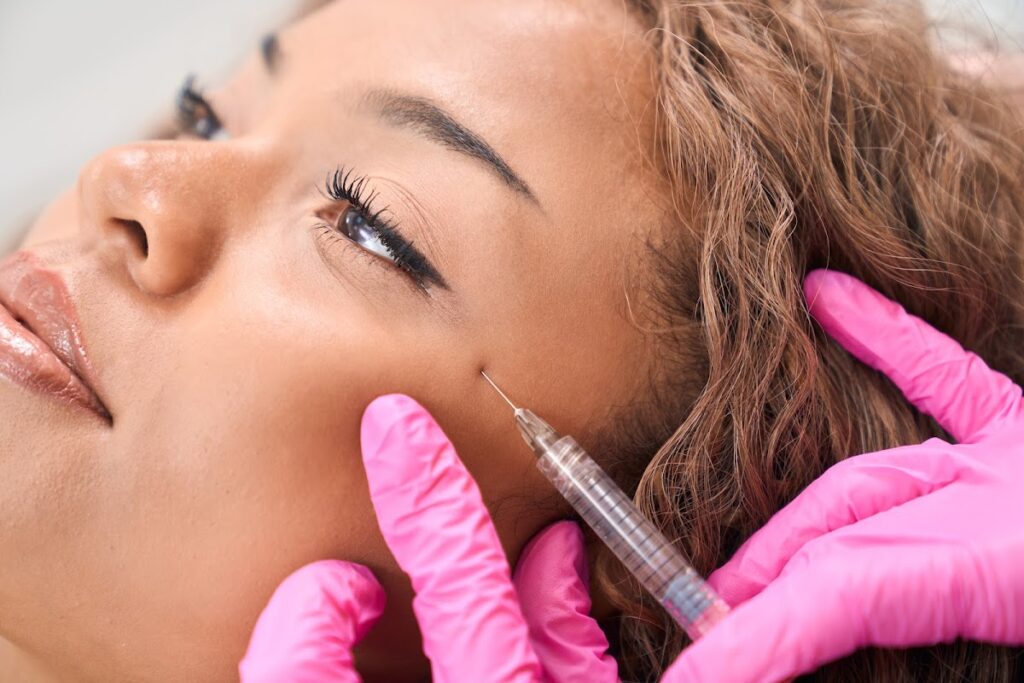
- Injection: The filler is injected into the targeted areas using a fine needle or cannula. This step enhances cheek contours, smooths wrinkles, or restores volume based on your goals.
3. Immediate Results
One of the most significant benefits of cheek fillers is the immediate transformation. After the procedure, the cheeks appear fuller, smoother, and more youthful. While the results are temporary, they can last 6 to 18 months, depending on the type of filler used.
4. Post-Treatment Care
After the procedure, mild side effects like swelling, redness, or itching at the injection site may occur. These typically resolve within a few days. To ensure optimal results and minimize discomfort:
- Avoid strenuous activities for 24 – 48 hours.
- Refrain from touching or massaging the treated area.
- Use cold compresses to reduce swelling if needed.
Rare complications, such as unintentional injection into a blood vessel, can occur. Your provider will review potential risks and advise you on reporting any unusual symptoms.
5. Follow-Up And Maintenance
Cheek fillers are a temporary solution, but regular follow-ups can help maintain your desired look. Providers often recommend scheduling touch-up appointments before the fillers completely dissipate to ensure consistent results.
Maintenance And Longevity Of Cheek Fillers
When you choose cheek fillers, you restore volume and commit to maintaining a rejuvenated appearance. Understanding how long fillers last, what factors affect their longevity, and how to care for them ensures the best results.
The duration of cheek fillers can vary depending on the type used and individual factors. On average, Hyaluronic Acid (HA) Fillers Typically last 6–18 months. Calcium Hydroxylapatite (CAHA) Fillers Tend to last longer but may vary by brand and application. As fillers are temporary, planning for periodic touch-ups is necessary to maintain results.
Several elements influence how long fillers last: Faster metabolism can break down fillers more quickly. Different formulations have varying lifespans. Smoking, excessive sun exposure, or poor skin care can shorten filler longevity.
Tips to Maintain Results
Extend the life of your cheek fillers by adopting these practices:
- Hydration: Drink plenty of water to keep your skin and fillers hydrated.
- Sun Protection: Use sunscreen daily to prevent UV damage, which can degrade fillers.
- Skincare: Follow a consistent skincare routine that includes moisturizers and anti-aging products.
- Healthy Lifestyle: Maintain a balanced diet, avoid smoking, and exercise regularly to support overall skin health.
Scheduling Touch-Ups
Schedule follow-up appointments before the fillers dissolve to maintain the desired volume and contour. A proactive approach ensures uninterrupted enhancement and allows your provider to make adjustments if needed.
Considering Alternative Or Additional Treatments
If your fillers diminish faster than expected or you desire a more permanent solution, consult your provider about Facial Fat Grafting. This semi-permanent option uses your body’s fat to restore volume. Alternative Fillers include CAHA or newer formulations tailored to your needs.
Cheek fillers are part of an ongoing journey to maintain a youthful appearance. By closely collaborating with your provider and adhering to recommended care practices, you can enjoy lasting results that reflect your inner vitality.
Safety And Considerations
The safety and effectiveness of cheek fillers depend mainly on the expertise of your practitioner and proper post-treatment care. Always choose a licensed, experienced provider who knows facial anatomy and uses FDA-approved dermal fillers. Check the clinic’s reputation, read patient reviews, and ensure the environment is professional and sterile.
During this consultation, discuss your medical history regarding allergies and autoimmune diseases that might make you a poor candidate for the procedure. Your provider will help you decide between the two main types of fillers (hyaluronic acid and calcium hydroxylapatite) and develop a treatment plan based on your aesthetic goals.
Mild side effects, including slight swelling, redness, or itching at the administration site, generally resolve within days. Rare complications include infection, scarring, and filler migration, mainly if the procedure is not performed correctly. Other more serious risks involve unintentional injection into a vessel.
Afterward, avoid manipulating or massaging the treated area for some time following treatment to prevent displacement of the filler. Cold compresses may reduce swelling. Avoid strenuous activities for 24 – 48 hours. Monitor for unusual symptoms such as severe pain, persistent swelling, or discoloration, and promptly report them to your provider.
Cheek fillers are temporary; results may last 6 to 18 months, depending on the product used. Subtle, well-planned enhancements yield the most natural-looking results, and regular follow-up appointments can help maintain the desired outcome. Commit to proper care and maintenance as part of your overall treatment plan for optimal results and safety.